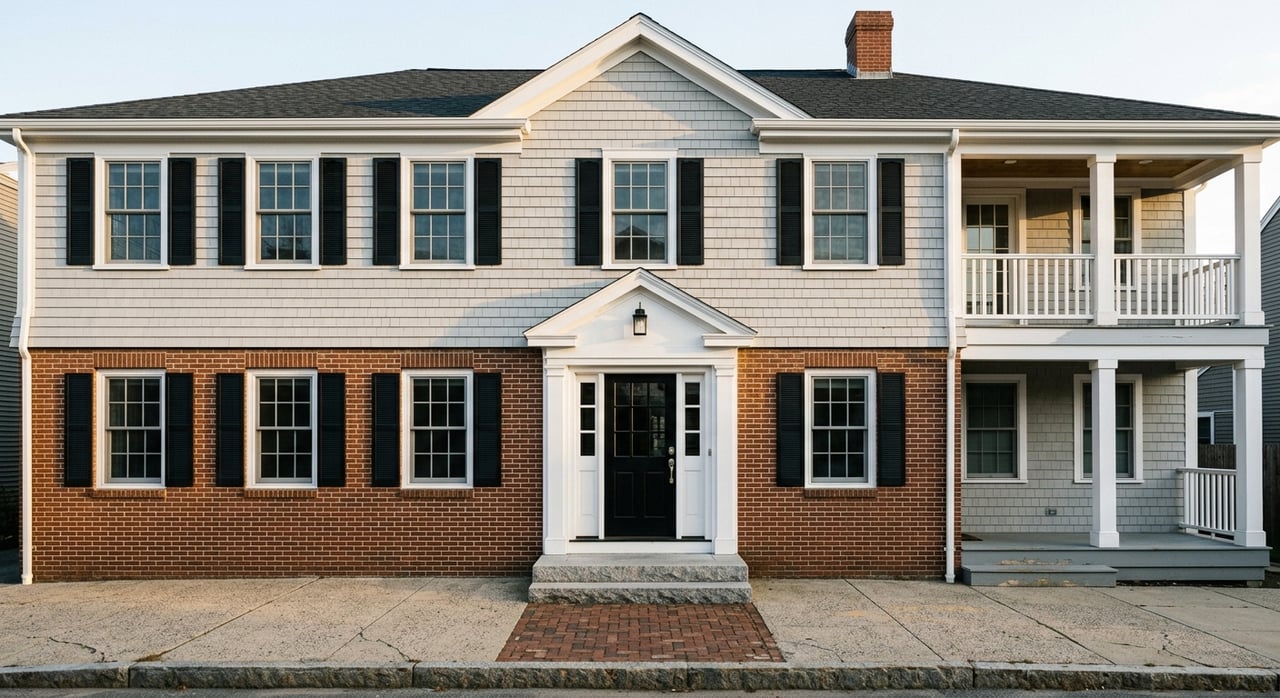
Thinking about buying a duplex, triplex, or fourplex in Springfield? You are not alone. Small multi-family properties can offer a path to owner-occupancy, rental income, or a first step into real estate investing, but Springfield has a few local rules and risks you need to understand before you jump in. This guide will walk you through what counts as a small multi-family here, how financing usually works, what numbers matter most, and where due diligence can make or break a deal. Let’s dive in.
Why Springfield stands out
Springfield is a market where small multi-family housing plays a big role. The city’s 2025 to 2029 Consolidated Plan says 2 to 4 unit properties make up 30% of Springfield’s 61,665 residential units. That is a meaningful share, especially if you are looking for house-hack or entry-level investment options.
The city also has a housing mix that supports both renters and owner-occupants. Springfield is roughly split between renter-occupied and owner-occupied households, which can support demand for both leased units and owner-occupied multi-family properties. For a first-time investor, that makes Springfield worth a closer look.
Pricing helps explain the appeal too. Recent market trackers place the median sale or listing price around $309,000 to $320,000, while rent trackers show average or median rents ranging from about $1,526 to $1,900 depending on the source. That does not guarantee a good deal, but it does show why many buyers start their search here.
Springfield moves fast
If you are planning to invest in Springfield, speed matters. Recent market data shows homes selling in about 22 to 27 days on average, with sale-to-list around 101%. In plain English, strong listings often do not sit for long.
That matters even more with 2 to 4 unit properties. If a listing has decent condition, workable rents, and financing-friendly features, you may need to evaluate it quickly. Having your financing lined up and your deal criteria ready can help you make better decisions under pressure.
What counts as small multi-family
Before you analyze returns, make sure you know what you are actually buying. Springfield zoning defines a two-family dwelling as a building with two dwelling units. A multi-family dwelling is a building with three or more units.
That might sound simple, but it has real consequences. Residential B and B-1 districts are primarily for single-family and two-family dwellings, while Residential C districts allow single-family, two-family, and multi-family dwellings. If a property was converted from single-family use, you need to confirm that the current unit count is legal.
Verify legal unit count
This is one of the most important steps in Springfield. The city may require a special permit to convert a single-family dwelling into a two-family or multi-family use where that use is not already allowed. That means you should not rely only on listing remarks or the seller’s description.
If you see terms like “in-law,” “finished basement,” or “bonus unit,” slow down and verify. Review permits, zoning records, and occupancy details so you know whether the extra unit is legal and recognized.
Financing options for beginners
For many first-time buyers, the easiest entry point is an owner-occupied 2 to 4 unit property. That is why house hacking is such a common starting strategy. You live in one unit and rent out the others to help offset your housing cost.
FHA financing basics
HUD says FHA financing is available on 1 to 4 unit properties, with down payments as low as 3.5% for eligible buyers. That can make a duplex, triplex, or fourplex more accessible than many people expect. For buyers who want to get started without a huge cash reserve, this can be a practical option.
There is one extra wrinkle with larger small multi-family properties. FHA includes a Self-Sufficiency Rental Income Eligibility test for 3 to 4 unit properties. In practical terms, that means a triplex or fourplex may face an added underwriting check that a duplex does not.
Conventional financing basics
Fannie Mae’s eligibility matrix shows up to 95% loan-to-value for 2 to 4 unit principal-residence purchases or limited cash-out refinances. That is why many buyers think of owner-occupied conventional financing as a 5% down option. For buyers with strong credit and stable income, that can be worth comparing against FHA.
For 2 to 4 unit investment properties, Fannie Mae shows a maximum 75% loan-to-value. That usually means a larger down payment if you are buying strictly as an investor and not planning to live there.
Freddie Mac also states that eligible 2 to 4 unit properties can be owner-occupied primary residences and that rental income from the other units can be added to your income for debt-to-income purposes. That can be especially helpful if you are trying to qualify for more property than your salary alone would support.
Why 5+ units are different
Once you move to 5 or more units, you are generally no longer in the same residential financing lane. Fannie Mae’s multifamily conventional program starts at five units and typically requires third-party reports such as an appraisal, environmental review, and property condition assessment.
That is why many new investors start with 2 to 4 units. The financing is usually more consumer-friendly, and the process is often more familiar to first-time buyers.
Numbers to know before you offer
A good-looking property is not always a good investment. You need a basic framework for evaluating income and expenses.
The three core terms to understand are net operating income, cap rate, and debt service coverage ratio.
Net operating income
Net operating income, or NOI, is your annual gross income minus operating expenses. Gross income can include rent plus other income sources like parking or laundry. You also need to account for vacancy and credit loss when estimating what the property will actually bring in.
Cap rate
Cap rate is stabilized NOI divided by the sales price. It gives you a quick way to compare one income-producing property to another. It is not the only number that matters, but it helps you judge whether the price lines up with the income.
Debt service coverage ratio
Debt service coverage ratio, or DSCR, compares cash flow or NOI to mortgage debt service. In simple terms, it shows whether the property’s income can support the loan payments. If the income is tight before you even close, that is a sign to dig deeper.
A simple way to analyze a deal
When you are reviewing a Springfield small multi-family listing, ask yourself:
- What are the current rents?
- What would market-supported rents likely be based on condition and unit type?
- What are the operating costs, including taxes and maintenance?
- After expenses, does the remaining income support the mortgage?
- Does the price make sense compared with recent neighborhood listings and rents?
You do not need a Wall Street spreadsheet to start. You just need a clear, honest look at income, expenses, and local comparables.
Springfield due diligence that matters
Springfield has several local factors that deserve extra attention when you are buying small multi-family property.
Older housing means more repair risk
Springfield’s housing stock is older than many buyers expect. A city housing study found that 41% of units were built before 1940, and only 14% were built since 1980. Older properties can offer character and layout flexibility, but they often come with higher maintenance needs.
That means your inspection mindset should be practical, not optimistic. Deferred maintenance, aging systems, and hidden repair needs can quickly change the numbers on a deal.
Lead risk is real
Lead should be treated as a real cost item, not an afterthought. Massachusetts says lead paint is commonly found in homes built before 1978, and the state’s Lead Law requires lead hazards to be removed or covered in homes built before 1978 when a child under age 6 lives there.
Springfield has also been described by the city as a high-risk community for childhood lead poisoning. If you are evaluating an older 2 to 4 unit property, factor lead compliance and remediation risk into your budget from day one.
Parking can affect usability
Parking is more than a convenience issue. Springfield’s zoning ordinance sets presumptive off-street parking requirements at 3 spaces for two-family dwellings. Multifamily dwellings require 1 space per studio or 1-bedroom unit and 1.5 spaces per 2-bedroom-or-larger unit.
If the lot does not support the required parking, that can affect how the property functions and how comfortably it supports multiple households. It is one more reason to compare the actual site with the legal use.
Permits and code records matter
Springfield’s building division handles permits, changes of use and occupancy, demolitions, and zoning violations. Building permits must be obtained before construction begins. For buyers, that means permit history is not just paperwork. It is part of understanding what was done, what was approved, and what might still need attention.
It is smart to review permits and open code cases before you commit. That is especially important if a property shows signs of additions, finished lower levels, or recent renovations.
Vacant property rules can add cost
If you are considering a vacant property or foreclosure, Springfield’s vacant property ordinance is important. Annual registration is required, the fee is $100 per year, a local property manager within 30 miles must be listed, and fines can reach $300 per week for noncompliance.
That may not affect every buyer, but it matters if your strategy includes rehabbing or holding a vacant building before lease-up.
Property taxes belong in your pro forma
Do not underestimate taxes when you run your numbers. Springfield’s FY2026 residential tax rate is $15.46 per $1,000 of value, and the CIP rate is $34.35 per $1,000. The city bills quarterly.
If you are buying based on projected cash flow, tax assumptions should be part of your first pass, not an afterthought after you are under contract.
Neighborhood-by-neighborhood opportunity
Springfield is not a one-note market. Current neighborhood-level market pages highlight areas like Forest Park, Sixteen Acres, North End, Liberty Heights, East Forest Park, Pine Point, East Springfield, Forest Park Heights, and Boston Road as active submarkets.
That matters because small multi-family opportunity often varies more by neighborhood than by citywide averages. One area may offer stronger rents for the price, while another may have better condition, easier parking, or more competition. Looking at Springfield block by block can tell you more than broad city numbers ever will.
A smart first-step strategy
If you are just getting started, the simplest path is often to focus on 2 to 4 unit owner-occupied properties. That gives you access to more flexible residential financing options and lets you learn landlording on a smaller scale.
As you search, keep your checklist tight:
- Confirm legal unit count
- Review zoning and parking
- Check permits and code history
- Budget for repairs and lead risk
- Include taxes in your numbers
- Compare rents, price, and mortgage cost carefully
You do not need to know everything before you start. You just need to approach Springfield small multi-family investing with good local information, realistic math, and a clear plan.
If you want help sorting through listings, comparing property types, or building a practical first-buy strategy, Peter Vamvilis offers responsive, data-informed guidance to help you move with confidence.
FAQs
Is Springfield, MA a good place to start small multi-family investing?
- Springfield can be a practical place to start because 2 to 4 unit properties make up 30% of the city’s housing stock, the city is roughly split between renters and owners, and small multi-family inventory plays an important role in the local market.
What counts as a small multi-family property in Springfield?
- In Springfield zoning, a two-family dwelling has 2 dwelling units, while a multi-family dwelling has 3 or more units. That distinction matters for zoning, permits, and parking requirements.
Can you use FHA financing for a Springfield duplex, triplex, or fourplex?
- Yes. FHA financing is available for 1 to 4 unit properties, with down payments as low as 3.5% for eligible buyers. Triplexes and fourplexes may also need to meet an added self-sufficiency test.
Can rent from other units help you qualify for a Springfield multi-family loan?
- Yes. Freddie Mac states that rental income from the other units in an eligible 2 to 4 unit owner-occupied property can be added to your income for debt-to-income purposes.
What should you verify before buying a Springfield multi-family property?
- Start with legal unit count, zoning, parking, permits, code history, repair needs, possible lead issues, and property taxes. These items can affect both financing and long-term performance.
Why is lead risk important in older Springfield properties?
- Springfield has an older housing stock, and Massachusetts says lead paint is commonly found in homes built before 1978. State law requires lead hazards to be removed or covered in homes built before 1978 when a child under age 6 lives there.
